Tuesday, October 22, 2013

Climate change adaptations - native communities

When I started this blog I explained it was inspired by the Mohawks' work to preserve ash trees which are a species threatened both by Emerald Ash Borer and climate change.

Here's a link to more examples of confronting climate change in other indigenous communities.

8 Tribes That Are Way Ahead of the Climate-Adaptation Curve

10/15/13

Read more at http://indiancountrytodaymedianetwork.com/2013/10/15/8-tribes-are-way-ahead-climate-adaptation-curve-151763

Monday, October 21, 2013

Something mainstream media usually misses in the solar cycle

It turns out that geomagnetic storms and electron fluxes occur predominantly before or after the famed high-energy solar activity part of the sun's cycle, per one of NOAA's nifty reports, graph on page 3.

Media attention to the solar cycle has been driven by climate change deniers who try to deceive people into believing that heat waves and droughts are only cyclic, ignoring the overdrive of anthropogenic global warming.  That denier deception is far more sinister than the, "Ignore the man behind the curtain," moment in the Wizard of Oz, even though both are attempts to deflect attention away from what is really happening.

The earth is accumulating heat even during the slow parts of the solar cycle, important to mention.  Yet mainstream media should also pay attention to other aspects of the solar cycle.

Why would we care about it?  Geomagnetic storms, proton surges and electron fluxes, what about them?  They affect electronics. They affect power grids and pipelines.  As we turn away from coal and oil (and I hope nuclear) we have protect and sustain the electronic culture and the devices that displace carbon energy.

Friday, October 4, 2013

If a man eat of the fish..

ProMed has carried a report that could be rather ominous.  If the prion that can give deer Chronic Wasting Disease (CWD) can be transmitted by something as common as alfalfa, what does that suggest about pathways to other animals such as cows, humans, or even fish fed on animal protein?   In Shakespeare's Hamlet, the prince muses, "A man may fish with the worm that hath eat of a king, and eat of the fish that hath fed of that worm."


Date: Fri 27 Sep 2013
Source: OASIS (Online Abstract Submission and Invitation System), The Wildlife Society Annual Conference, Milwaukee, Wisconsin [edited]
http://tinyurl.com/p5clbdy


Uptake of prions into plants
----------------------------
Session title: Current science of chronic wasting disease: what have we learned in the last 5 years?
Author: Christopher Johnson, US Geological Survey, Madison, WI

Abstract
--------
Chronic wasting disease (CWD) and scrapie-infected animals shed infectious prions during both the preclinical and clinical phases of disease. Contamination of environments with prions released from animals or from infected carcasses appears to contribute to the transmission of these diseases.

Previous work has suggested that soil may serve as an environmental disease reservoir. Vegetation is ubiquitous in CWD-contaminated environments and plants are known to absorb a variety of substances from soil, ranging from nutrients to contaminants.

The uptake of proteins from soil into plants has been documented for many years and we have been investigating the uptake of prions into plants in vitro. Using laser scanning confocal microscopy, we observed root uptake of fluorescently-tagged, abnormal prion protein in the model plant thale cress or mouse-eared cress (_Arabidopsis thaliana_), as well as the crop plants alfalfa (_Medicago sativa_), barley (_Hordeum vulgare_), and tomato _(Solanum lycopersicum_). Using serial protein misfolding cyclic amplification, a sensitive biochemical prion detection method, we have found evidence of prions in aerial tissues from these species, as well as maize (_Zea mays_). Both stems and leaves of _A. thaliana_ grown in culture media containing prions are infectious when injected into mice and oral bioassays are underway for _A. thaliana_ and other plants. Our results suggest that prions are taken up by plants and that contaminated plants may represent a previously unrecognized risk of human, domestic species, and wildlife exposure to CWD and scrapie agents.

--
Communicated by:
Terry S Singeltary Sr

Monday, September 30, 2013

Imagine success in a world of climate changes - Year 2054

By Joan Cope Savage

Communication about climate change is challenging, we know that.  The diagnosis of climate change sometimes lacks an agreement about a preferred alternative to the disease state. What's the description?  And the prescription?

We can be confused when an indecisive doctor hands off a complex list of What you can do.  What we need are coaches, those who get up close and personal, expecting us to exercise daily, and sticking with us while we apply our energies towards a greater goal.  We have to imagine ourselves healthy to make ourselves healthy.

In coaching our way through climate change, what is the greater goal?

Like Israelites fleeing Egypt, do we have the slightest clue what the old homeland may look like when we find it at last? Do we have to wander for forty years, figuratively or literally, until we reach a place of beauty, safety, and abundance, and know we have found our home?

I propose that imagining a beautiful post-apocalyptic world is essential. 

About that word -  apocalypse is a revelation, an  'un-covering.'   The unfortunate human tendency to loll around and wait to be dragged kicking and screaming though destruction to a new perception is why the word apocalypse has become linked with the kinds of catastrophes that it sometimes takes to get human attention.

So let's see if we can pay attention without more catastrophes.

We as all humans, catastrophes include several floods, droughts and storms from 2010 onward.


What could a lovely sustainable 2054 world look like?
Or at least what would we prefer, if we can do it?

Imagine agriculture productive enough so that people can eat healthily, yet without waste. That would mean reducing both food waste and transportation waste, so probably a mix of longer-distance transported and locally grown food.  So that might mean long distance via train, and local distribution via electric trucks and vans.

Imagine clean skies without soot, acids, or undue ozone.

Imagine occupying buildings that are well insulated and oriented to sun and wind in such a way that supplemental heating or cooling is minimal.  Imagine buildings well adapted to the extreme weather events that are likely to continue for some time.  So if that means stilts near a shoreline, or earth-sheltered in Tornado Alley, let us get on with it.

I'd like the South Pacific nation of Kiribati to still be above the waterline, without having to have had a mass evacuation.  I'd like the nation of the Netherlands to still exist.

This is just the initial spin, looking for a happy expectation for 2054.

This is intentionally unfinished.

PS No more nuclear contamination.


Sunday, August 18, 2013

Off Topic - civic duty - shots fired

Yesterday evening there were shots fired somewhere in the city. I could hear them,  though they weren't close. Three, several minutes, two, a few minutes, two, a few minutes, two.

A family member was not happy that I didn't call the police. I'd called a few years ago when I thought I heard gun shots, but by the time the officers arrived, there was only an approximation about from what direction, much less a house location.

This time, I let it go, and the next day, today, went through the news reports to see what had transpired. Nothing in the press.

I had promised my family I'd call the non-emergency number and ask about what to do next time.

When I did, I explained I hadn't wanted to tie up 911 with an unnecessary call when I wasn't near an event.
Of course I was told I should have called, always call,  but the officer seemed in a hurry to wrap up the conversation, because he had other calls waiting.

The so-called non-emergency number was overloaded.

When I feel like it is not worth it to call the police about gunshots at a distance, what does that mean?

That I came to my senses, or lost them...

What it seems to mean to me is that I'd like to be living in a sleepy town where so little is happening that the officer on duty has time to discuss the previous evening's gunshots.


Saturday, July 27, 2013

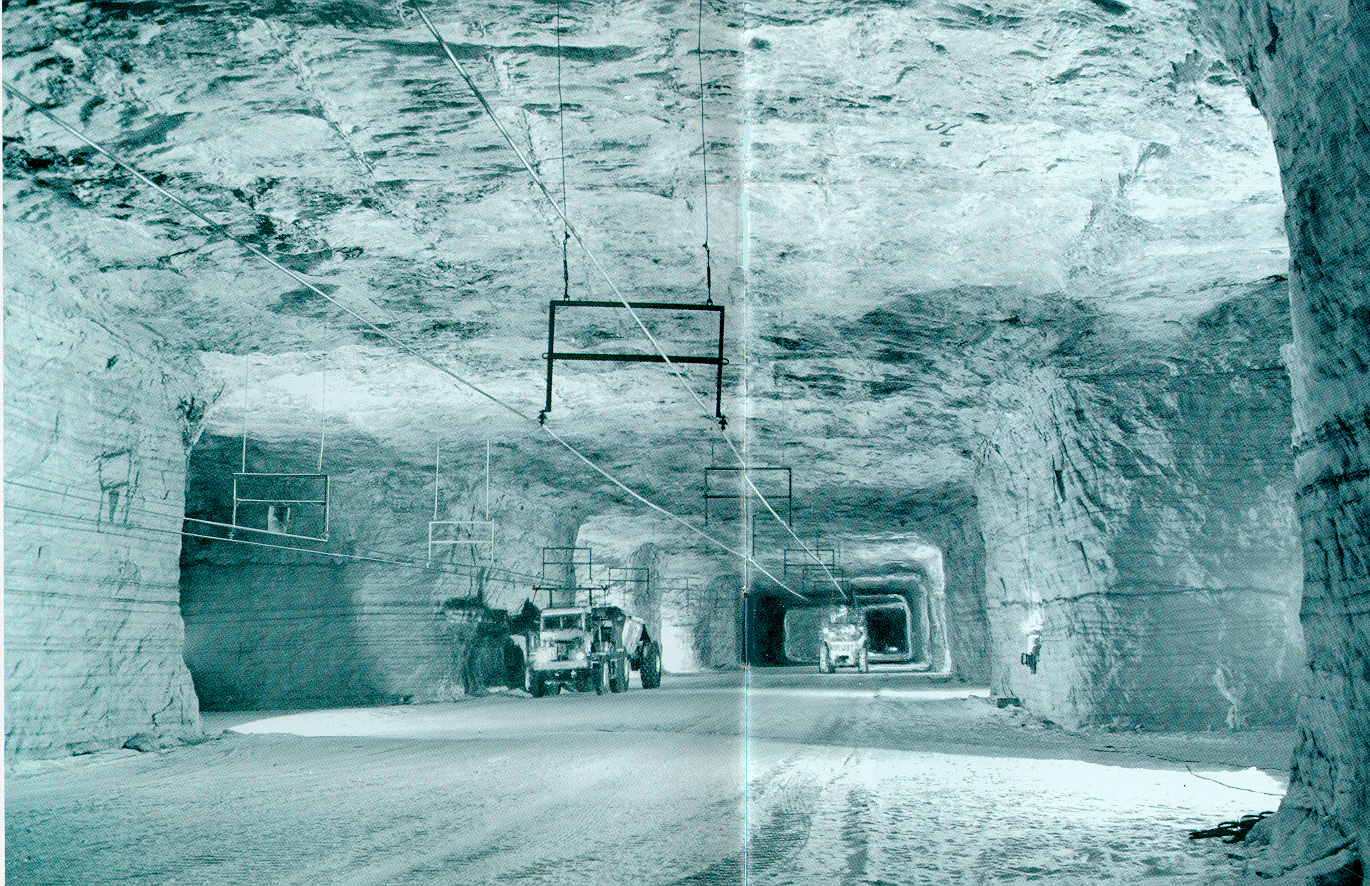
Pillar of Salt

by Joan Cope Savage


View of pillars in the salt mine under the city of Detroit.
Biblically speaking -  given a chance to escape disaster, Lot's wife was told to flee without a backward look. Yet, she turned. We don't know if, in a flash, she saw Sodom consumed by sulfurous fire or if she died in the process of turning.  As the story has it, the backward look turned her into a pillar of salt.

Her fate reminds me of the shadows of people burnt into the walls of Hiroshima by the force of nuclear explosion or the hollow casts of Pompeiian citizens shaped in volcanic ash. We know about them through the patterns they left behind when disaster struck, disaster they did not escape.

How many among us are not 'bad' people, but like Lot's wife, we are hesitate to flee the familiar?
I might be one.

We -or I- could turn into a modern version of the pillar of salt, looking backward, even briefly.

I strive to move even a little bit, acknowledging my uncertain future.   Like those trapped in time before me, I might not be moving fast enough. I'd rather be found face-forward, at least.


Saturday, July 20, 2013

note to self about science fiction

By Joan Savage

Allegedly, a Cold War solution to the risk of nuclear war (another abrupt event to consider, to be sure) was to move the core personnel of government to an undisclosed location in the Appalachians. That approach was without thinking through the logistics of finding and moving people within the twenty minutes’ warning window for incoming missiles.
A rush of meltwater from the Antarctic or Greenland might have weeks, months, or years to work its way to DC, but its disruption of climate along the way would be just as spectacular. Who needs science fiction.

Cross posted as a comment on a Climate Progress article that I recommend, Like Butter: Study Explains Surprising Acceleration of Greenland's Inland Ice.