Wednesday, April 7, 2021

Greenland ice melt continues to concern

The soil under the Greenland icecap seems to have been growing plants about a million years years ago. That's a relatively short time in geology. The Greenland ice cap is shrinking far faster.


https://www.washingtonpost.com/opinions/2021/04/07/greenland-ice-sheet-melting-climate-change-history/


Thursday, July 11, 2019

Planting Ahead - Trees

News is catching up with some of my old posts.
More adroit news media are spreading the word far better than I.

Plant Trees! Plant Lots of Trees.

It's not the only thing we need to do,
but we must do each thing we can.


https://www.theguardian.com/environment/2019/jul/04/planting-billions-trees-best-tackle-climate-crisis-scientists-canopy-emissions?fbclid=IwAR1v5oP93SJw1E_kldbrSamlNMfr0bRCxIbBrT2qANgT-AXeDn6m31bKXmU


Thursday, August 30, 2018

Notification

This may appear automatically but I did a screen save (therefore the hotlinks won't work).

Friday, October 27, 2017

Herbal Mushroom Soup - gluten free 
October 27, 2017

  1. 17 grams clarified butter (Organic Valley ghee)
  2. 58 grams Portobello mushroom (vitamin D enriched), chopped
  3. 85 grams white Onion, chopped
  4. 8 grams Parsley, chopped
  5. approximately 1/2 teaspoon freshly ground Nutmeg
  6. approximately a pint  (it was 438 mL) poultry broth (defatted), warmed up in a separate container (microwave bowl in my case)
  7. 1/4 tsp Redmond sea salt
  8. approximately 3/4 cup (it was 188 mL) whole organic Jersey cow milk, warmed up in a separate container (microwave bowl in my case)
  9. 12 g (1 and a half tablespoons) tapioca flour

Stove top 2 quart sauce pan: 

Ingredients 1 to 5:
Melted the butter, and put mushroom, onion, parsley and nutmeg in it to soften and meld at medium heat.

Added the pre-warmed broth (#6) and stirred gently while the mix came to a bubbly simmer.
Added the sea salt (#7).

Added the milk (#8) and stirred in and kept simmering.

Poured off a cup of the hot mix into a ceramic bowl with a handle and blended the tapioca flour (#9) 
into the separate hot mix, before washing the results back into the main saucepan with the help of more hot mix.

Stir to be sure the tapioca is well mixed. 
This makes a light herbal version of mushroom soup.  
It's not the gooey version that relies on gluten for a thickener. I could add more tapioca if it had to be used as a sauce on something.


Monday, December 7, 2015

Talking with Quakers about Climate Change

by Joan Savage

Yesterday I facilitated a discussion with a small group, mostly Quakers, about Climate Change.
When I asked them what word or two first came to mind,  the answers were as diverse as: oceans, political action, controversy, population, education, solar, and living beings.

Here below is an outline I distributed at the beginning to help the group start.
I deliberately went lightly on the stunning amount of evidence, which as you can see, I subordinated to "Have we done our 'homework'?"

CLIMATE CHANGE

Do we speak 

Love to fear? 
Truth to power? 

Have we done what we can and are we ready?
Have we done our ‘homework’?
Prudent preparation for environmental instability.
Drought/deluge; internal migrants and refugees.
Food instability and/or scarcity.
Press for sustainable energy sources and use.
Fair and democracy-compatible energy use;
due decision process among peoples and countries.

Who speaks for you, and for us? 

How do Friends see climate change in terms of 
National security/ global security?
Climate change is called the “threat multiplier.”

What canst thou say? 


Where can you - and the Meeting - do the MOST good in combatting climate change?

Can you educate those around you?
Can you help eliminate atmospheric pollution?
Can you prepare your family and community?
Can you call for wise policies?


Time is growing short


Are You Ready?


We cherish the living earth, our bountiful home. 

Sunday, December 21, 2014

Tantalum, Coltan and You

For any of you to read this blog, you are most likely operating in a network that uses tantalum capacitors. Your cell phone (smart or dull), your wireless network, and your country's satellites and missile guidance systems use tantalum.  So of course probably does your GPS, if you have one.

Why should you care? Well, at the very least, tantalum is a strategic mineral, as so much of our communications and economy would fail without it. It is also used in turbine alloys, so that redoubles its strategic importance.

 Government foreign policy almost never mentions tantalum, or its source mineral coltan (technically called tantalite).   The silence of governments is a huge clue, not about its supposed unimportance, but about tantalum's overwhelming importance.   In some ways, it is too big to discuss.

What would upset the flow of tantalum into the electronics and turbine manufacturing industries?

Most tantalum in our devices has been freshly extracted from coltan, it was not recycled, so the logical place to look first are what countries produce coltan, and what is going on there.

Countries with coltan resources have shifted in dominance over recent decades.  As of 2013, two thirds of global coltan production, by metric tons, was mined in the cluster of Rwanda, the D.R. Congo and other parts of Africa.

 For those of us who track world news, can we say the g-word, genocide, or the r-word, rape, without thinking of Rwanda or the Congo?   Can anyone think of a UN sanction or other meaningful intervention in either country?  Help me, I haven't found one that had any teeth to it.

So I'm using an old cell phone, about ten years old, a flip phone. My laptop is over five years old.   I'm as dazzled as anyone by the advances in technology, and if I had more money, I might be tempted to silence my conscience and buy new devices, even knowing the dismal origins of tantalum.

If someone can start selling fair-trade electronics with clear-conscience components, that would be a  shock. I'm not holding my breath!  You do what you want.   I haven't offered an easy answer for you or me.

In the long run of plan(t)ing ahead, we need to reuse and recycle this mineral, obviously. Meanwhile, the related human rights abuses are shocking, at least to me, reminding me of what happened when Cotton became King in the 1800s.  How can we be so blind?

Thursday, January 23, 2014

Change in emphasis - sunshine and vitamin D

by Joan Savage

Planting Ahead was conceived as a blog about adapting to major change, inspired by the Mohawks' work on conserving black ash trees. I'm still much about adapting to major change.

In the past five weeks I have been paying less attention to the none-the-less important work of preparing for and mitigating climate change, and more attention to what I need to get healthy, healthy enough to do any useful work.
So, Planting Ahead is still about adapting to major change, and that change begins with me.

This health endeavor has involved reading two books, many hours reading medical abstracts, changing my diet, changing sleep pattern, and experimenting with exposing myself occasionally to UV-B light.  However, I remain open to adjustments.  Just today, my daughter shared a link on redheads, pheomelanin and the MC-1R, which led me a few minutes later to find a rather scary abstract on redheads and melanoma. 

The two books:

James Dowd, The Vitamin D Cure, revised edition
Michael Holick, The Vitamin D Solution

Portal to medical abstracts:
http://www.ncbi.nlm.nih.gov/pubmed/

My experimental source of UV-B light:
Exo Terra Repti-Glo 10.0 Compact Fluorescent Desert Terrarium Lamp

---------
From Shakespeare's MacBeth

MacDuff:

Such welcome and unwelcome things at once
'Tis hard to reconcile.
Malcolm:
Well, more anon -


Monday, December 16, 2013

a problem with novelty

 by Joan Savage

I'm mulling over how humans are drawn to novelty. In this characteristic we are a lot like other mammals and some birds.  

In one story, some indigenous people in Amazonia had a cure for headaches, but they were so fascinated by a bottle of aspirin that they ignored what they already had locally for free and bartered for aspirin. 

That dynamic seems so familiar.  Advertising is built on images of new, special, rare, best.

We may be fascinated by risks that are novel, too, more attentive, at least for a time, to a rare danger than a nearby familiar danger. That could be a survival skill.   

If we really accept that an earthquake will happen along a fault line, and build for that inevitability, no matter how indefinite the timing, we've done a good thing.  But, having a stockpile for disaster is not an excuse to forget to stop at a red light or brush one's teeth.

Do things come back in perspective when we satisfy our curiosity and sense of preparedness about a formerly novel item or risk? 

Curiosity has been both a delight and a curse. 

Thursday, November 14, 2013

Ocean pH and us, updated

By Joan Savage

 It has been said we land animals are creatures born of the seas. Our ancestors came to land as sacks of sea water, and our blood somewhat resembles seawater, or at least some patches of seawater: salty, full of nutrients, some oxygen, some carbon dioxide, some bicarbonate ion.

A recent BBC article on ocean acidification came with a jaunty, even flippant title, "Emissions of CO2 driving rapid oceans 'acid trip.' " I must point out that 'acid trip' connotes a youthful misadventure, albeit memorable. I didn't try LSD, but I've had to listen to those who did experiment on themselves, and they thought it was important.

'Acid trip' does not hint at irretrievable change in the oceans, so I am holding BBC accountable.  What is happening to the oceans is poisoning, and more like brain damage.


The BBC article included a sidebar of bulleted points, they are useful and I have cut and pasted here:

From BBC:

ACIDIFYING OCEANS

  • The oceans are thought to have absorbed up to half of the extra CO2 put into the atmosphere in the industrial age
  • This has lowered their pH by 0.1
  • pH is the measure of acidity and alkalinity
  • It usually ranges from pH 0 (very acidic) to pH 14 (very alkaline); 7 is neutral
  • Seawater is mildly alkaline with a "natural" pH of about 8.2
End BBC sidebar.

So,  the ocean's pH has already changed by 0.1.  Would it bother you if your coffee or tea's pH changed by 0.1? Probably not.

Consider this comparison instead.  Human arterial blood functions at a narrow range of pH, from pH 7.35 to pH 7.45. Outside of that range of pH range lies emergency situations and death. So the entire range of human blood's physiological health is 0.1.

The oceans have on average shifted by pH 0.1, the maximum pH shift that arterial blood in the human body could tolerate.

At what point does our mother the ocean become fatally ill and die?

*******
Supplemental:
Other news stories on ocean acidification:

1) Scientists warn of hot, sour, breathless oceans

By SETH BORENSTEIN, AP Science Writer   Updated 4:30 pm, Wednesday, November 13, 2013
http://www.sfgate.com/news/science/article/Scientists-warn-of-hot-sour-breathless-oceans-4981452.php

"...the sweet spots where the factors combine are getting harder to find, Feely and Riebesell said.The world ocean pH already has gone from 8.1 to 8.0 — it's considered a 26 percent increase in acidity because scientists measure hydrogen ions for this."

Friday, November 1, 2013

imaging a positive future

I have to admit this blogging seems to be largely a personal exercise.
So just for the record, or my own record, it seems worth it to imagine a post-fossil fuel society.

Let's be comfortable, peaceful, cheerful, and with many of the personal freedoms that we currently enjoy, like open communications and information flow, and the fragrances of living plants in fresh air.

How to have..

Well-insulated, and ventilated, homes and offices that take little energy to heat, cool, and have humidity control.

Landscape architecture and infrastructure that enables easy walking and public transport to employment, services, and entertainment.

Rechargeable delivery trucks and mini-buses.

Greenhouses.
Regionally grown food.
Fish ponds.

Trains and canals for efficient long-range transport.
Maybe some new forms of transport.

Parks near schools.

Full-life accessibility features.

Sigh.

Just had to make some notes.

Tuesday, October 22, 2013

Climate change adaptations - native communities

When I started this blog I explained it was inspired by the Mohawks' work to preserve ash trees which are a species threatened both by Emerald Ash Borer and climate change.

Here's a link to more examples of confronting climate change in other indigenous communities.

8 Tribes That Are Way Ahead of the Climate-Adaptation Curve

10/15/13

Read more at http://indiancountrytodaymedianetwork.com/2013/10/15/8-tribes-are-way-ahead-climate-adaptation-curve-151763

Monday, October 21, 2013

Something mainstream media usually misses in the solar cycle

It turns out that geomagnetic storms and electron fluxes occur predominantly before or after the famed high-energy solar activity part of the sun's cycle, per one of NOAA's nifty reports, graph on page 3.

Media attention to the solar cycle has been driven by climate change deniers who try to deceive people into believing that heat waves and droughts are only cyclic, ignoring the overdrive of anthropogenic global warming.  That denier deception is far more sinister than the, "Ignore the man behind the curtain," moment in the Wizard of Oz, even though both are attempts to deflect attention away from what is really happening.

The earth is accumulating heat even during the slow parts of the solar cycle, important to mention.  Yet mainstream media should also pay attention to other aspects of the solar cycle.

Why would we care about it?  Geomagnetic storms, proton surges and electron fluxes, what about them?  They affect electronics. They affect power grids and pipelines.  As we turn away from coal and oil (and I hope nuclear) we have protect and sustain the electronic culture and the devices that displace carbon energy.

Friday, October 4, 2013

If a man eat of the fish..

ProMed has carried a report that could be rather ominous.  If the prion that can give deer Chronic Wasting Disease (CWD) can be transmitted by something as common as alfalfa, what does that suggest about pathways to other animals such as cows, humans, or even fish fed on animal protein?   In Shakespeare's Hamlet, the prince muses, "A man may fish with the worm that hath eat of a king, and eat of the fish that hath fed of that worm."


Date: Fri 27 Sep 2013
Source: OASIS (Online Abstract Submission and Invitation System), The Wildlife Society Annual Conference, Milwaukee, Wisconsin [edited]
http://tinyurl.com/p5clbdy


Uptake of prions into plants
----------------------------
Session title: Current science of chronic wasting disease: what have we learned in the last 5 years?
Author: Christopher Johnson, US Geological Survey, Madison, WI

Abstract
--------
Chronic wasting disease (CWD) and scrapie-infected animals shed infectious prions during both the preclinical and clinical phases of disease. Contamination of environments with prions released from animals or from infected carcasses appears to contribute to the transmission of these diseases.

Previous work has suggested that soil may serve as an environmental disease reservoir. Vegetation is ubiquitous in CWD-contaminated environments and plants are known to absorb a variety of substances from soil, ranging from nutrients to contaminants.

The uptake of proteins from soil into plants has been documented for many years and we have been investigating the uptake of prions into plants in vitro. Using laser scanning confocal microscopy, we observed root uptake of fluorescently-tagged, abnormal prion protein in the model plant thale cress or mouse-eared cress (_Arabidopsis thaliana_), as well as the crop plants alfalfa (_Medicago sativa_), barley (_Hordeum vulgare_), and tomato _(Solanum lycopersicum_). Using serial protein misfolding cyclic amplification, a sensitive biochemical prion detection method, we have found evidence of prions in aerial tissues from these species, as well as maize (_Zea mays_). Both stems and leaves of _A. thaliana_ grown in culture media containing prions are infectious when injected into mice and oral bioassays are underway for _A. thaliana_ and other plants. Our results suggest that prions are taken up by plants and that contaminated plants may represent a previously unrecognized risk of human, domestic species, and wildlife exposure to CWD and scrapie agents.

--
Communicated by:
Terry S Singeltary Sr

Monday, September 30, 2013

Imagine success in a world of climate changes - Year 2054

By Joan Cope Savage

Communication about climate change is challenging, we know that.  The diagnosis of climate change sometimes lacks an agreement about a preferred alternative to the disease state. What's the description?  And the prescription?

We can be confused when an indecisive doctor hands off a complex list of What you can do.  What we need are coaches, those who get up close and personal, expecting us to exercise daily, and sticking with us while we apply our energies towards a greater goal.  We have to imagine ourselves healthy to make ourselves healthy.

In coaching our way through climate change, what is the greater goal?

Like Israelites fleeing Egypt, do we have the slightest clue what the old homeland may look like when we find it at last? Do we have to wander for forty years, figuratively or literally, until we reach a place of beauty, safety, and abundance, and know we have found our home?

I propose that imagining a beautiful post-apocalyptic world is essential. 

About that word -  apocalypse is a revelation, an  'un-covering.'   The unfortunate human tendency to loll around and wait to be dragged kicking and screaming though destruction to a new perception is why the word apocalypse has become linked with the kinds of catastrophes that it sometimes takes to get human attention.

So let's see if we can pay attention without more catastrophes.

We as all humans, catastrophes include several floods, droughts and storms from 2010 onward.


What could a lovely sustainable 2054 world look like?
Or at least what would we prefer, if we can do it?

Imagine agriculture productive enough so that people can eat healthily, yet without waste. That would mean reducing both food waste and transportation waste, so probably a mix of longer-distance transported and locally grown food.  So that might mean long distance via train, and local distribution via electric trucks and vans.

Imagine clean skies without soot, acids, or undue ozone.

Imagine occupying buildings that are well insulated and oriented to sun and wind in such a way that supplemental heating or cooling is minimal.  Imagine buildings well adapted to the extreme weather events that are likely to continue for some time.  So if that means stilts near a shoreline, or earth-sheltered in Tornado Alley, let us get on with it.

I'd like the South Pacific nation of Kiribati to still be above the waterline, without having to have had a mass evacuation.  I'd like the nation of the Netherlands to still exist.

This is just the initial spin, looking for a happy expectation for 2054.

This is intentionally unfinished.

PS No more nuclear contamination.


Sunday, August 18, 2013

Off Topic - civic duty - shots fired

Yesterday evening there were shots fired somewhere in the city. I could hear them,  though they weren't close. Three, several minutes, two, a few minutes, two, a few minutes, two.

A family member was not happy that I didn't call the police. I'd called a few years ago when I thought I heard gun shots, but by the time the officers arrived, there was only an approximation about from what direction, much less a house location.

This time, I let it go, and the next day, today, went through the news reports to see what had transpired. Nothing in the press.

I had promised my family I'd call the non-emergency number and ask about what to do next time.

When I did, I explained I hadn't wanted to tie up 911 with an unnecessary call when I wasn't near an event.
Of course I was told I should have called, always call,  but the officer seemed in a hurry to wrap up the conversation, because he had other calls waiting.

The so-called non-emergency number was overloaded.

When I feel like it is not worth it to call the police about gunshots at a distance, what does that mean?

That I came to my senses, or lost them...

What it seems to mean to me is that I'd like to be living in a sleepy town where so little is happening that the officer on duty has time to discuss the previous evening's gunshots.


Saturday, July 27, 2013

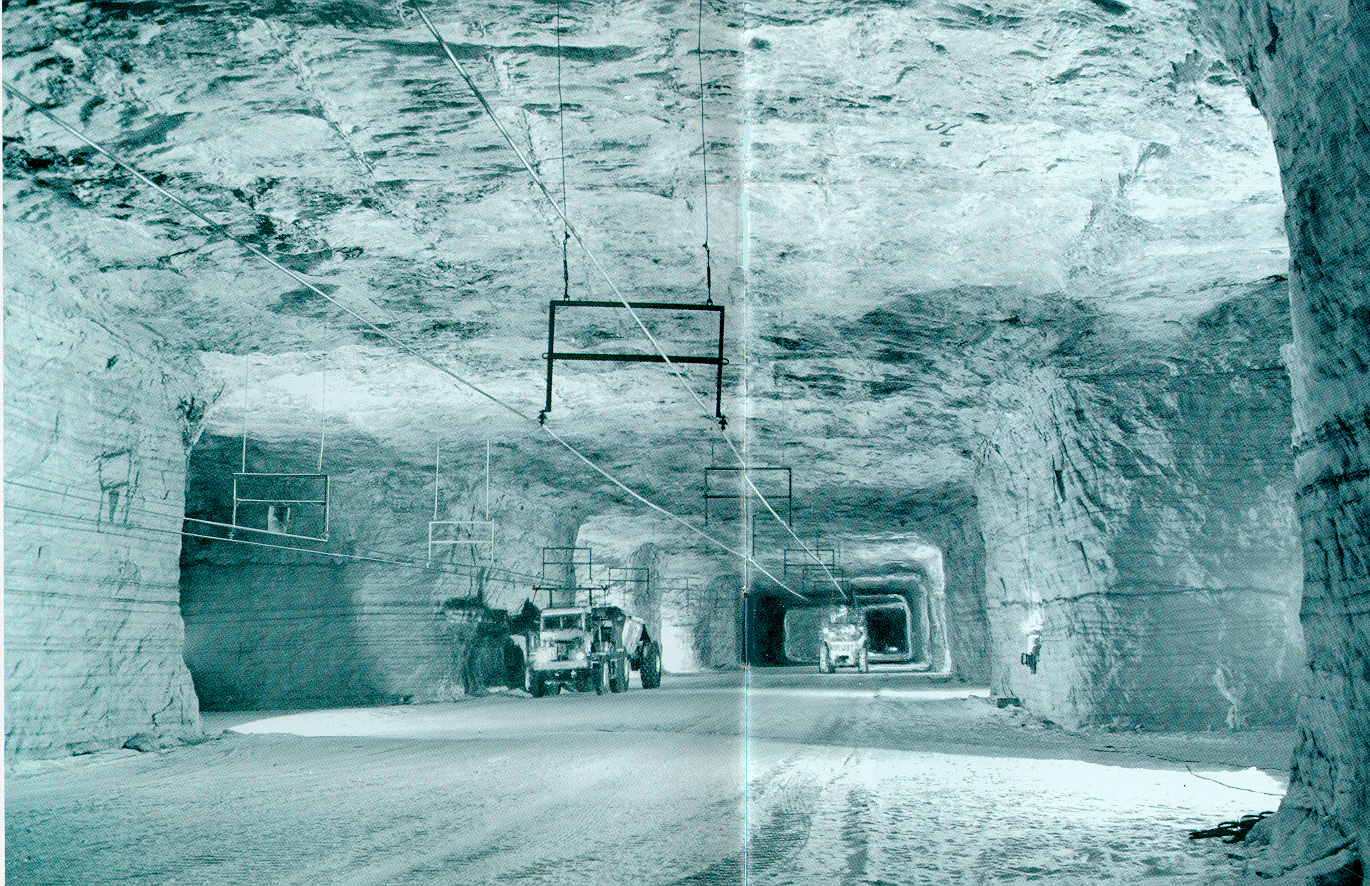
Pillar of Salt

by Joan Cope Savage


View of pillars in the salt mine under the city of Detroit.
Biblically speaking -  given a chance to escape disaster, Lot's wife was told to flee without a backward look. Yet, she turned. We don't know if, in a flash, she saw Sodom consumed by sulfurous fire or if she died in the process of turning.  As the story has it, the backward look turned her into a pillar of salt.

Her fate reminds me of the shadows of people burnt into the walls of Hiroshima by the force of nuclear explosion or the hollow casts of Pompeiian citizens shaped in volcanic ash. We know about them through the patterns they left behind when disaster struck, disaster they did not escape.

How many among us are not 'bad' people, but like Lot's wife, we are hesitate to flee the familiar?
I might be one.

We -or I- could turn into a modern version of the pillar of salt, looking backward, even briefly.

I strive to move even a little bit, acknowledging my uncertain future.   Like those trapped in time before me, I might not be moving fast enough. I'd rather be found face-forward, at least.


Saturday, July 20, 2013

note to self about science fiction

By Joan Savage

Allegedly, a Cold War solution to the risk of nuclear war (another abrupt event to consider, to be sure) was to move the core personnel of government to an undisclosed location in the Appalachians. That approach was without thinking through the logistics of finding and moving people within the twenty minutes’ warning window for incoming missiles.
A rush of meltwater from the Antarctic or Greenland might have weeks, months, or years to work its way to DC, but its disruption of climate along the way would be just as spectacular. Who needs science fiction.

Cross posted as a comment on a Climate Progress article that I recommend, Like Butter: Study Explains Surprising Acceleration of Greenland's Inland Ice.

Wednesday, July 10, 2013

The poop on worm poop as a paleotemperature marker, corrected and updated

by Joan Savage

Why are researchers about paleoclimate so interested in earthworms, or actually in one kind of earthworm?

The common nightcrawler earthworm, Lumbricus terrestris, produces castings year round that include calcium carbonate granules. Not exciting you might think, and even with a vivid imagination,  no, no, earthworm farming is not the latest foolish idea for carbon dioxide sequestration.

Photo of Lumbricus terrestris from wikipedia commons

The calcium-carbonate-flecked worm poop was among those curiosities of nature known to few, and among the few were several scientists collaborating in the UK,  one group is Emma A.A. Versteegh, Stuart Black  Matthew G. Canti  Mark E. Hodson.
Their article Earthworm-produced calcite granules: a new terrestrial palaeothermometer? is fortunately Open Access. What they  produced is a newprocedure for tracking LOCAL temperature conditions over thousands of years in many areas of the planet. This method uses  δ18O values, as determined on individual calcite granules. As they say, "As the granules are abundant in modern soils, buried soils and archaeological contexts, and can be dated using U-Th disequilibria, the developed palaeotemperature relationship has enormous potential for application to Holocene and Pleistocene time intervals."
The correlation to  δ18O data by Kim & O'Neil was at p < 0.0005

In the world of science, particularly climate science, that's a rock star. 


The more recent of the two article's authors are Loredana Brinza, Paul D. Quinn, Paul F. Schofield,  J. Frederick W. Mosselmans, and Mark E. Hodson.  The Brinza et al article published earlier this week in Geochimica et Cosmochimica Acta, "Incorporation of strontium in earthworm-secreted calcium carbonate granules produced in strontium-amended and strontium-bearing soil," was treated like a rock star, possibly because it was confused with the previous article's bolder stance. The title and abstract modestly didn't hint at the implication of their work.
The full article is available for free for what you can read in five minutes! The full article is 17 pages including references. I raced to the conclusions which were both optimistic about the eventual use as a paleoproxy, yet they cautioned that more research is needed on soil conditions and temperature. What had been a variable in the study was the amount of strontium in the soil.
Basically, here's how the Sr/Ca works. The ratio of strontium to calcium in calcium carbonate formation is affected by temperature, but strontium90 presence has also been used to monitor nuclear fallout.  The Sr/Ca ratio has been tracked in coral reefs, over 10^5 years to within 0.5 degrees C accuracy when tested against oxygen isotope records.  That's over 100,000 years, count those zeroes.  So, the earthworms' casting granules with their distinct Sr/Ca ratios are miniature temperature records for the time that they pooped, but soils are not the watery solutions from which corals took their minerals.  

Keep both the bold Versteegh and the cautious Brinza articles in mind.  One's ready to roll and the other might prove useful, too.

Where has the nightcrawler been in the Holocene and Pleistocene? 

In the now-rare definitive work by John W. Reynolds, The Earthworms  (Lubricidae and Sparganophilidae) of Ontario,  Reynolds cites Gates (1972).  Lumbricus terrestris Linnaeus 1758 is a native of Palearctis, now known as Europe, Iceland, North America, South America, Siberia, South Africa, and Australasia.

Reynolds also comments on a belief that the worms had been introduced to North America from Europe, which he corrects to say the worms were native south of the last continental glaciation.  That does suggest that eager researchers may be limited to recently re-introduced post-Pleistocene worm castings in forests of Wisconsin, upper New York, Canada, and other areas that were glaciated up to about 11K years ago.

Palearctis leaves out North Africa and Antarctica. Australasia doesn't include mainland Asia, the subcontinent of India or the Middle East, either.

Even so,  what an opportunity to pinpoint temperature conditions at archaeological sites that have been dated by carbon isotopes, or in soils or geologic strata!   It's not just for coral and mussels anymore.

I am grateful to BBC news for correctly reporting that the Versteegh et al article was the breakthrough.


TB and geoengineering responses to climate change

Joe Romm recently posted on research that further discredits the geoengineering proposal to seed the world's oceans with iron. The iron seeders think that an algae bloom would store CO2 in ocean sediments, but Joe points to studies  that show the effects would be flawed and or short-lived.

My comment was so much fun to write that I've copied it here:

The iron-sprinkling notion reminds me of the 19th century belief that wearing garlic around one’s neck would ward off tuberculosis.
Because TB takes time to become fully symptomatic, the garlic wearers refused to believe they were making a mistake until it was too late. That surely sounds like the current inadequate measures to reduce symptomatic climate change.
The iron sprinkling and the garlic are also somewhat similar in terms of dose and effect.
Garlic extract can kill Mycobacterium tuberculosum, at least in a Petri dish, but it’s not proven that eating a huge amount constantly is possible at therapeutic doses. Similarly, the iron sprinkling has the now-identified bad side effects and is not possible at a therapeutic dose.
To wrap the analogy, TB levels go down when preconditions for communicability are reduced. Even today with cures available, prevention is a better epidemiological approach than trying to treat millions of cases.
Same goes for climate impacts.
Being hopelessly addicted to puns, I must say that it felt good to get that off my chest.

Sunday, June 30, 2013

the Re resource reconsider re re re

Reduce > reuse & repair > recycle.
When are people going to notice the RE in resource?


The closing of the comments period for the Pebbles Mine in Alaska prompted me to look up more about the demand for copper and other minerals.  It's ugly.

Clean energy isn't totally clean.
-- At least not while it depends on mining and mining pollution.

Copper in wind turbines, copper in solar panels, copper in electronics, are all part of a huge global demand for the metals and minerals associated with electricity.

Things I own and use every day...